Skip to content


GoHighLevel vs Kartra vs Kajabi: CRM & Funnel Comparison
GoHighLevel, Kartra, and Kajabi serve different operating models: GoHighLevel prioritizes CRM depth, agency delivery, funnels, SMS, and automation; Kartra combines marketing and memberships; Kajabi emphasizes courses, communities, and creators. Compare checkout, Email, pricing, data ownership, and support before moving Contacts. A useful starting point is this conversion funnel strategy resource, which helps frame offers around measurable customer journeys.
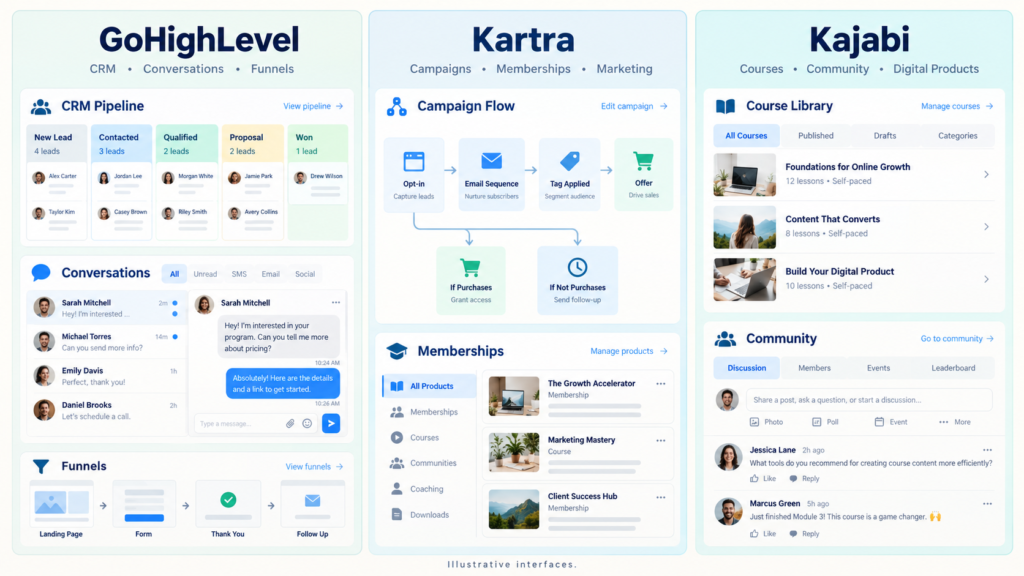
Why Your CRM and Funnel Builder Shape Agency Growth
Your CRM and funnel builder determine whether agencies can duplicate delivery, respond quickly to leads, and report revenue accurately. GoHighLevel connects pipelines, native texting, Email, calendars, Voice AI, and sub-accounts, while Kartra favors integrated campaigns and Kajabi favors branded learning experiences. Choose according to repeatability: agencies need permissions, snapshots, white-label controls, and client separation; course creators need video hosting, memberships, checkout, and student access. A practical evaluation should trace one lead from landing pages through purchase, onboarding, support, and renewal. Measure staff minutes per sale, response speed, failed payments, and reporting effort rather than counting features.

When to Consider Switching from Kartra in 2026
Switching from Kartra makes sense when campaign logic, CRM visibility, or agency scalability has become more important than its all-in-one simplicity. GoHighLevel is stronger when several brands require separate pipelines, reusable snapshots, SMS conversations, and white-label administration. Before Migration, export Contacts, tags, purchases, subscriptions, pages, and consent records; then document every trigger and sequence. Keep Kartra active during a controlled overlap, verify payment webhooks, and test unsubscribe behavior. Do not switch solely because another platform advertises more features: calculate support hours, connector fees, training, and rebuild labor. Teams should also confirm terms of service, privacy policy, and refund policy requirements before recreating checkout flows.

Signs Your Current GoHighLevel or Kartra Setup Is Holding You Back
Your current GoHighLevel or Kartra setup may be holding you back when staff manually reconcile leads, duplicate contacts, miss follow-ups, or rebuild similar funnels for every client. Other warning signs include unclear ownership, broken attribution, slow page editing, inconsistent Email personalization, and SMS campaigns without consent controls. Audit one complete customer journey and record every handoff, spreadsheet, webhook, and approval. If the same task appears repeatedly, replace it with a documented Automation, not an additional tool. Review contact limits, API reliability, deliverability, and checkout reporting monthly. Independent reviews can add another perspective, but validate claims against your own test account and service-level needs.
Example: Cutting Admin Time by Rebuilding Funnels
A digital agency can cut admin time significantly when funnel rebuilding removes repetitive qualification, booking, and onboarding work rather than merely changing page designs. For example, the team can route form answers into pipeline stages, send an immediate Email, use SMS reminders for booked calls, and trigger a client welcome checklist after payment. GoHighLevel snapshots standardize that architecture across accounts, while Kartra templates can preserve campaign logic and Kajabi products can accelerate course delivery. Establish a baseline first: count weekly manual touches, average lead response time, and hours spent preparing reports. Then test one offer for 30 days, compare conversion and labor metrics, and retain human review for refunds, complaints, and high ticket clients.

5 Deal-Breakers for Agencies and Service Businesses
Agencies and service businesses should weigh five deal-breakers: account structure, communication channels, checkout flexibility, learning delivery, and total pricing. GoHighLevel generally suits marketing agencies that manage multiple brands because sub-accounts and white-label options support repeatable operations. Kartra is attractive when campaigns, memberships, and affiliate management belong in one environment. Kajabi is compelling for creators who prioritize polished courses, communities, and video hosting. Examine SMS carrier costs, Email volume, payment processors, reporting exports, and permission controls before selecting a plan. Also ask whether the platform can connect Twilio, Mailgun, HubSpot, CallRail, or Salesforce without fragile workarounds. The best choice is the one that reduces operational complexity for your exact workflow, not the one with the longest feature list.

Build Pipelines and Manage Contacts at Scale
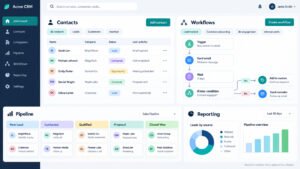
Building pipelines and managing Contacts at scale requires a consistent data model before any Automation is activated. Define lifecycle stages such as new lead, qualified, booked, proposal, won, onboarding, and renewal; then specify one owner, one exit condition, and one next action for each stage. GoHighLevel makes this operational model visible through pipelines, tasks, opportunities, and sub-accounts. Kartra can organize prospects through tags and campaigns, while Kajabi typically relies more heavily on offers, products, and broadcasts. Deduplicate imports, normalize phone numbers, preserve consent timestamps, and create suppression rules before launching SMS. Use weekly exception reports to find records without owners or next steps. This discipline improves forecasting and prevents an attractive funnel from becoming an unreliable database.
Email Deliverability Beyond the Basics
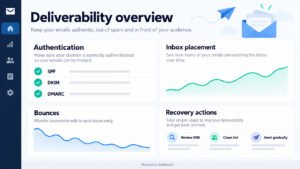
Email deliverability depends on authentication, reputation, consent, content quality, and disciplined list management rather than platform choice alone. Configure SPF, DKIM, and DMARC for every sending domain, warm volume gradually, suppress hard bounces, and separate transactional traffic from promotional Email. GoHighLevel, Kartra, and Kajabi can all support sequences, but each requires monitoring of complaints, opens, clicks, and domain reputation. Businesses should document permission and unsubscribe handling, test local time zones, and avoid purchasing lists. Use a small seed panel across Gmail, Outlook, and business domains before a major launch. A sending review should also cover SMS consent, sender identity, and links used in checkout and confirmation messages.

Mapping Real Workflows: Courses, Memberships and Automation Together
Mapping real workflows means connecting acquisition, checkout, access, engagement, support, and renewal in one visible journey. Kajabi offers a coherent path for course creators and memberships, Kartra combines campaigns with gated content, and GoHighLevel can coordinate funnels, CRM stages, Email, SMS, and external learning tools. Start with a lifecycle map: opt-in, qualification, purchase, welcome, lesson reminders, inactivity intervention, completion, upsell, and cancellation. Mark which event is authoritative, such as a payment confirmation or membership status, and prevent duplicate triggers. Automation should accelerate predictable actions while leaving sensitive cases for a person. Include failed payment recovery, refund handling, consent changes, and support escalation. This approach exposes gaps before students or clients encounter them.

What Course Creator Teams Need From a Funnel Builder
Course creator teams need a funnel builder that supports persuasive landing pages, reliable checkout, access rules, Email onboarding, progress communication, and clear revenue reporting. Kajabi is often strongest for creators who want an integrated website builder, video hosting, memberships, and community experience. Kartra adds campaign-oriented selling and affiliate management, while GoHighLevel is attractive when the creator also sells coaching, appointments, SMS support, or agency services. Test a real launch rather than a blank template: create an order bump, apply a coupon, process a failed payment, issue a refund, and remove access. Confirm whether students receive consistent transactional messages and whether staff can export purchase history.
Where Funnel Software Ends and Business Operations Begin
Sales funnels software ends where broader business operations begin: finance, fulfillment, support, staffing, compliance, and strategic reporting. GoHighLevel can coordinate much of the customer-facing workflow, but it should not replace accounting controls, documented service delivery, or careful human judgment. Kartra and Kajabi likewise need integrations when a business requires advanced helpdesk workflows, inventory, payroll, or enterprise governance. Define system ownership for each record and event. The CRM should own lead status; the payment processor should own settlement; the learning platform should own access; and accounting should own reconciliation. Connecting these systems with explicit failure alerts is safer than hiding complexity inside a single Automation.

Kartra, GoHighLevel and Kajabi Pricing Compared
Kartra pricing, GoHighLevel pricing, and Kajabi pricing should be compared through total operating cost rather than headline subscription cost. Include contacts, Email volume, SMS usage, AI credits, payment fees, extra domains, team seats, client accounts, integrations, migration labor, and training. GoHighLevel can deliver strong value for agencies when one plan supports repeatable sub-accounts and white-label services. Kartra may be efficient for a single integrated marketing and membership operation. Kajabi can justify its price when course delivery, community, and creator-focused support reduce the need for several tools. Build a twelve-month model using current usage, expected list growth, campaign frequency, and failed-payment recovery.

GoHighLevel and Kartra Billing Compared
GoHighLevel and Kartra billing differ most in how accounts, usage, and business models are structured. GoHighLevel billing can make sense for agencies that resell branded delivery across multiple sub-accounts, while Kartra billing is easier to understand when one business operates campaigns, products, and memberships inside one account. Compare included contacts, sending allowances, domains, users, payment options, and cancellation terms. Calculate the cost of serving one additional client and one additional thousand subscribers, not only the base plan. Confirm whether SMS, Email, phone numbers, AI automation, and premium support are separate line items. A written billing worksheet prevents a low introductory price from hiding a high operational cost after growth.
Breaking Down Your Kartra Monthly Cost
Kartra monthly cost should be broken into plan access, contact capacity, Email volume, products, memberships, users, domains, payment processing, and any required connectors. Estimate three scenarios: launch, steady state, and peak promotion. A creator with one course may need less than an agency managing many brands, even if the agency has fewer total contacts. Record which features are genuinely used, because paying for unused campaign capacity does not improve conversion. Test whether growth triggers a plan jump rather than a modest marginal charge. Then compare the resulting figure with GoHighLevel and Kajabi using identical assumptions for staff time, SMS, support, and migration.

What the GoHighLevel Agency Plan Really Unlocks
The GoHighLevel Agency Plan really unlocks operational leverage when agencies need reusable snapshots, client sub-accounts, permissions, reporting, branded login experiences, and repeatable onboarding. Its value depends on utilization: a single creator may not benefit from agency controls, while a marketing agency can package funnels, CRM stages, Email, SMS, and automation as a managed service. Calculate margin per client after messaging, phone, support, and implementation costs. Create a standard snapshot, document variables, and test it in a sandbox before deploying it to paying clients. Clarify ownership of assets, data export rights, and termination procedures so white-label delivery remains professional when a relationship ends.

Hidden Usage Costs: Emails, SMS and AI Credits Decoded
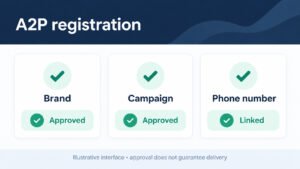
Hidden usage costs arise when Email, SMS, phone calls, AI credits, domains, or premium integrations scale faster than subscribers expect. Model sends per lead, messages per appointment, failed-payment reminders, and support conversations separately. GoHighLevel may expose usage more clearly through communication services, while Kartra and Kajabi can embed more functionality in plan limits; neither removes the need for forecasting. Track opt-outs, duplicate sends, retries, and inactive contacts because automation errors can become billing errors. Set alerts before monthly thresholds, assign approval rights for broadcasts, and review provider pricing for numbers and carrier registration. AI automation should be treated as a variable operating expense, with human quality checks for customer-facing copy and decisions.
Where Monthly Costs Creep Up on Each Platform
Kajabi, Kartra, and GoHighLevel monthly cost creeps up through growth events that are easy to overlook: more contacts, additional brands, higher message volume, extra users, premium integrations, and payment-related fees. Kajabi costs may rise when a team needs more products, administrators, or advanced marketing capacity. Kartra costs can change with contact growth and plan requirements. GoHighLevel costs can expand through phone, SMS, Email, AI, domains, and client-service overhead. Build a usage register with owner, unit price, current volume, forecast volume, and escalation threshold. Review it before every campaign and quarterly before renewal. This makes pricing a management decision instead of a surprise.

5 Questions to Ask Before Choosing a Plan
Before committing to any pricing plan, ask five questions: What is included at the forecast contact count? Which Email, SMS, phone, and AI charges are usage-based? How many users, domains, products, and accounts are allowed? Can data and automations be exported if the business leaves? Which support, training, and compliance responsibilities remain with the customer? Ask for answers in writing and reproduce a representative workflow during a trial. Include peak launch traffic, refund handling, subscription pauses, and a second administrator in the test. Agencies should also ask whether client billing and white-label presentation are permitted. These checks protect both cash flow and operational continuity.

Test Free Trials, Refunds and Upgrade Paths
Free trials, refunds, and upgrade paths should be tested as business processes, not treated as marketing promises. Confirm trial length, card requirements, cancellation timing, refund eligibility, data retention, and whether downgrades remove products or contacts. Create a small GoHighLevel, Kartra, and Kajabi test workspace, import non-sensitive records, and run one funnel from opt-in to refund. Check how Email, SMS, memberships, affiliate payouts, and CRM history behave after cancellation. Document the exact owner and deadline for each action. A trial is successful when it answers operational questions about checkout, access, support, and export, not merely when a page looks attractive.
How to Calculate True ROI
Calculating true ROI requires comparing incremental gross profit with subscription, usage, labor, implementation, and switching costs. For an agency, measure revenue per client, delivery hours, lead response time, retention, and margin after GoHighLevel or Kartra expenses. For a service business, measure booked calls, close rate, average order value, repeat purchases, and support hours. Kajabi users should include course completion, refund rate, membership retention, and upsell revenue. Use a conservative model with attribution gaps and failed payments included. A platform pays for itself when its measurable contribution exceeds total cost over a defined period, not when it merely replaces a familiar login.

Flat Pricing vs Tiered Billing for High-Volume Senders
Flat pricing beats tiered billing for high-volume senders when usage is predictable, margins are stable, and campaigns can exceed contact or message thresholds without penalty. Tiered billing may be better for seasonal creators whose volume fluctuates sharply. Compare annualized cost at low, normal, and peak volume, including Email, SMS, retries, and dormant contacts. Negotiate safeguards such as alerts, caps, or approval requirements where available. High-volume senders should also prioritize deliverability because cheap volume is worthless if messages reach spam folders. The right structure balances forecast accuracy, cash flow, and campaign flexibility.

Feature by Feature: Funnels, Email, CRM and Automation
Feature-by-feature comparisons should test the entire operating chain: landing pages, funnels, checkout, Email marketing, CRM records, SMS, automation, memberships, reporting, and integrations. GoHighLevel usually leads when agencies need CRM-centered execution and reusable client infrastructure. Kartra offers a cohesive campaign environment for businesses selling products and memberships. Kajabi is strongest when the primary asset is a premium learning experience. Do not score features equally; weight each by revenue impact and staff dependency. Run identical scenarios for a lead, buyer, student, refund, and inactive subscriber. The resulting scorecard is more reliable than a feature checklist because it reveals where teams actually spend time.
Funnel Builder Showdown: Pages, Checkouts and Order Bumps
The funnel builder showdown should compare page speed, template flexibility, mobile editing, checkout reliability, order bumps, upsells, coupons, subscriptions, and tracking. ClickFunnels remains a useful benchmark for dedicated funnel construction, while GoHighLevel adds CRM, SMS, and agency workflows. Kartra integrates selling with campaigns and memberships, and Kajabi emphasizes creator products and learning delivery. Build one landing page, one checkout, one order bump, and one post-purchase offer in each trial. Test pixels, receipt emails, failed cards, refunds, and mobile behavior. A beautiful page does not compensate for broken attribution or delayed access.

ClickFunnels vs GoHighLevel: Template Flexibility and Speed
ClickFunnels vs GoHighLevel is mainly a comparison between focused funnel speed and broader customer-operations depth. ClickFunnels can help a marketer launch a conventional sales path quickly, whereas GoHighLevel connects pages to pipelines, calendars, SMS, Email, tasks, and agency sub-accounts. Evaluate both with the same wireframe and measure time to publish, mobile corrections, form mapping, checkout completion, and reporting setup. GoHighLevel may require more configuration because it exposes more operational choices. ClickFunnels may require additional systems when a team needs advanced CRM ownership or client account management. Choose the faster complete workflow, not simply the faster page editor.

Course Creator Strengths of Kajabi and Kartra
Kajabi and Kartra have built-in course creator strengths that reduce the number of systems needed to sell and deliver digital products. Kajabi emphasizes polished lessons, communities, offers, video hosting, and creator presentation. Kartra combines gated content with campaign sequences, memberships, checkout, and affiliate management. GoHighLevel can support course and coaching workflows, especially when CRM, appointments, SMS, and agency services are central, but teams should verify learning-specific needs carefully. Test lesson navigation, drip schedules, access removal, student notifications, coupons, and refunds. The best platform minimizes both student friction and administrator work.
Email Sequences and Deliverability Compared
Email marketing, sequences, and deliverability should be judged through segmentation, trigger accuracy, personalization, suppression, testing, and reporting. GoHighLevel supports CRM-linked campaigns and SMS follow-up; Kartra emphasizes visual campaign logic; Kajabi connects broadcasts and sequences closely to offers and products. Build a five-message onboarding sequence and test new lead, purchaser, refund, and unsubscribed states. Verify that contacts do not receive contradictory promotions after buying. Use authenticated domains, plain-text fallbacks, meaningful reply addresses, and behavior-based suppression. Review click quality rather than opens alone, since privacy features distort open-rate comparisons.

How to Warm Up a New Sending Domain
Senders should warm a new domain gradually by mailing engaged recipients first, maintaining consistent volume, and monitoring bounces, complaints, authentication, and inbox placement. Do not solve a reputation problem by changing domains repeatedly. Configure a dedicated sending subdomain, align visible sender identity, and keep promotional and transactional streams separate. Test links and unsubscribe pages across common personal and business inboxes. GoHighLevel, Kartra, and Kajabi can execute sequences, but sender reputation remains the operator’s responsibility. Establish a pause rule when complaints or hard bounces exceed the team’s threshold, then investigate list source and content before resuming.

Kartra Sequences vs GoHighLevel Automation
Kartra sequences and GoHighLevel Automation both coordinate follow-up, but their operational emphasis differs. Kartra’s campaign logic suits marketers who organize products, tags, and timed messages in one environment. GoHighLevel connects workflow triggers to CRM stages, appointments, conversations, pipelines, tasks, and SMS, making it useful for service businesses and agencies. Compare branching rules, delays, retries, enrollment removal, error visibility, and human handoff. Rebuild a lead-to-booking workflow in both systems and intentionally test duplicate forms, rescheduling, no-shows, purchases, and opt-outs. The stronger workflow is the one staff can explain, audit, and repair without hidden dependencies.
Managing Every Contact in Your Pipeline
Managing every contact in your pipeline requires a shared taxonomy for source, lifecycle, owner, offer, consent, engagement, and revenue. GoHighLevel makes these attributes actionable through opportunities, conversations, workflows, and tasks. Kartra can use tags and campaign behavior, while Kajabi organizes much of the relationship around products, offers, and memberships. Import only necessary fields, normalize values, and define a single source of truth for purchases and cancellations. Build views for unassigned leads, overdue tasks, active customers, failed payments, and renewal candidates. Contacts should never be trapped in a marketing list with no operational owner.

How GoHighLevel Sub-Accounts Keep Client Data Separate
GoHighLevel sub-accounts keep client data separate by giving each brand its own contacts, pipelines, calendars, workflows, assets, permissions, and reporting context. Agencies should create a naming standard, restrict staff access, and document which snapshots can be updated centrally. Never assume separation is automatic: audit integrations, domains, phone numbers, payment accounts, and webhook destinations before launch. Run a test contact through every account and confirm that no cross-client Email, SMS, task, or report appears. Export and termination procedures should be documented in the contract. Correct sub-account governance protects confidentiality while allowing agencies to deliver repeatable services efficiently.

Memberships and Courses: Access Control and Student Portals
Memberships and courses require dependable access control, student portals, lesson sequencing, payment status handling, and support visibility. Kajabi offers a polished creator-centered experience, Kartra combines gated content with campaigns, and GoHighLevel can coordinate sales, CRM, coaching, and communication around a learning product. Test every access event: successful purchase, failed renewal, refund, cancellation, manual grant, and reactivation. Confirm that the student sees the correct product and that staff can identify the reason for access. Include accessibility checks, mobile navigation, downloadable resources, and notification timing. A secure portal protects both learner trust and recurring revenue.
AI and Automation: Hype vs Practical Daily Wins
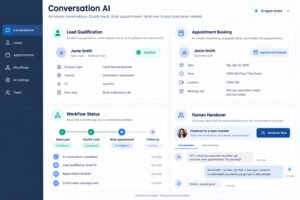
AI capabilities and Automation create practical value when they remove repetitive classification, drafting, routing, and summarization work without hiding responsibility. GoHighLevel can assist with conversation handling, lead qualification, appointment workflows, and Voice AI; Kartra and Kajabi can support targeted campaign execution within their respective ecosystems. Start with low-risk tasks: summarize calls, suggest replies, label intent, draft reminders, and identify inactive leads. Require approval for refunds, pricing promises, medical or legal claims, and changes to customer records. Measure minutes saved, accuracy, escalation rate, and conversion, not the number of AI features enabled.

Where AI Saves Hours in Funnels and Email Marketing
AI saves hours in funnels and Email marketing by turning customer data into draft copy, segmentation suggestions, response summaries, and follow-up priorities. A GoHighLevel team might summarize a discovery call, place the lead in a pipeline stage, propose an SMS reminder, and flag missing information for review. Kartra users can accelerate campaign variations, while Kajabi creators can draft lesson announcements and segment broadcasts. Keep brand voice, consent, and factual accuracy rules explicit. Compare AI-assisted production with a human baseline across revision time and error rate. Automation should publish only after a person checks claims, links, personalization, and eligibility.

Where Automation Still Needs a Human
Automation has limits for agencies and service businesses because unusual customers, sensitive complaints, ambiguous intent, and policy exceptions need judgment. A workflow cannot reliably decide whether a frustrated client deserves a refund, whether a lead is qualified for a complex engagement, or whether a message could create a compliance risk. Design escalation paths, pause conditions, ownership rules, and audit logs before activating campaigns. Keep humans involved in high ticket clients, failed payments, negative sentiment, and data deletion requests. Review automations after every offer, staff, provider, or policy change. Reliable systems are not those with the fewest people; they are those that send the right cases to people quickly.
Scorecard Verdict: Matching GoHighLevel, Kajabi and Kartra to Your Business
The scorecard verdict is straightforward: GoHighLevel is usually the strongest fit for agencies, service businesses, CRM-led sales, SMS, and white-label delivery; Kajabi is often best for course creators and coaches centered on learning products; Kartra is compelling for integrated campaigns, memberships, and digital products. These are tendencies, not guarantees. Weight each platform against your actual checkout, support, reporting, deliverability, and migration requirements. A business selling coaching plus appointments may favor GoHighLevel, while a premium academy may prefer Kajabi. A campaign-focused seller with gated content may prefer Kartra. Validate the verdict with a live workflow and twelve-month cost model.

Our Feature by Feature Scorecard
Our feature by feature scorecard uses seven categories: CRM and pipelines, funnels and checkout, Email and SMS, courses and memberships, automation, agency controls, and total cost. GoHighLevel wins CRM, SMS, agency controls, and service-business automation. Kajabi wins course presentation and creator-oriented learning delivery. Kartra wins integrated campaign management for teams that want marketing and gated products together. Funnel and checkout results depend on template needs, payment complexity, and tracking requirements. Price results depend on usage, client count, and labor. Mark each category essential, useful, or irrelevant before scoring so a polished but unnecessary capability does not distort the decision.

What Digital Product Sellers Should Prioritize
Digital product sellers should prioritize course structure, memberships, student access, video hosting, checkout, coupons, refunds, community, Email onboarding, and retention reporting. Kajabi is a natural candidate when the learning experience is the product and branding matters deeply. Kartra suits sellers who want campaign automation, gated content, and affiliate management closely connected. GoHighLevel is valuable when digital products sit beside coaching, appointments, SMS support, or agency services. Test an entire launch, including a failed renewal and refund, rather than judging only the lesson editor. Protect student trust by ensuring access changes happen promptly and communications remain consistent.
Agency and SaaS Mode Requirements
Digital agency and SaaS mode requires white-label branding, sub-account isolation, reusable snapshots, permissions, client reporting, billing processes, and dependable integrations. GoHighLevel is designed around this operating model and can help an agency package CRM, funnels, Email, SMS, calendars, and automation as a recurring service. Kartra and Kajabi may still work when each client needs a separate marketing or learning environment, but compare provisioning and support effort carefully. Define what clients can edit, who owns data, how cancellations are handled, and how custom requests are priced. A repeatable implementation process protects margins better than a broad promise of unlimited customization.

How to Read Customer Reviews and Ratings
Customer testimonials and user ratings are useful for identifying recurring friction, but they should be treated as evidence to investigate rather than universal proof. Look for patterns involving support response, page editing, deliverability, billing clarity, integrations, course access, and migration. Separate complaints caused by platform defects from those caused by configuration, poor data hygiene, or unrealistic expectations. Ask reviewers about team size, contact volume, region, business model, and technical skill. A solo Kajabi creator and a multi-client GoHighLevel agency are not testing the same product. Reproduce the most relevant claims in a trial and record the result.

What a Good Kartra to GoHighLevel Migration Looks Like
A good migration from Kartra to GoHighLevel begins with inventory, export, mapping, and parallel testing rather than an overnight switch. Teams listed pages, forms, products, memberships, tags, sequences, purchases, subscriptions, domains, integrations, and consent records. They mapped Kartra campaigns to GoHighLevel workflows, replaced unsupported logic deliberately, and tested checkout, Email, SMS, access, refunds, and reporting. A phased launch moved one offer first, retained backups, and compared conversion and support metrics. Staff training covered daily CRM actions, troubleshooting, and escalation. The lesson is simple: migration is a controlled operating change, not merely a platform import.
Common Complaints and How to Work Around Them
Common complaints include configuration complexity, inconsistent support, unexpected usage charges, deliverability problems, limited course depth, and difficult migrations. Work around them with a documented architecture, naming conventions, sandbox testing, cost alerts, authenticated domains, and a defined support owner. GoHighLevel users should standardize snapshots and permissions; Kartra users should document campaign dependencies; Kajabi users should map external CRM and sales requirements early. Avoid adding another integration until the native workflow has been tested. When a limitation is real, state it in the sales process and design a fallback before launch.

Final Verdict: When to Stay, When to Switch, and Why
The final verdict depends on operational fit. Stay with Kajabi when course creators or coaches value a polished learning environment and the CRM demands are modest. Stay with Kartra when integrated campaigns, memberships, and digital product selling work reliably without costly workarounds. Switch to GoHighLevel when CRM visibility, SMS, pipelines, agency scale, white-label delivery, or client separation has become central. Compare evidence from a controlled pilot, not anxiety about competitors. Preserve data, communicate changes early, and measure response time, conversion, retention, support effort, and total cost after launch.

Staying on Kajabi: Ideal for Course Creators and Coaches
Staying on Kajabi is ideal for course creators and coaches whose core workflow is a branded learning experience, community, offer, and nurture sequence. Keep Kajabi when students navigate smoothly, payments and access are dependable, and external CRM requirements remain manageable. Before adding tools, document the exact gap: advanced pipeline management, SMS, appointment routing, agency accounts, or support automation. A connector may solve a narrow need without forcing a disruptive migration. Review monthly cost, product limits, administrator access, analytics, and student retention twice yearly. The right decision may be to optimize Kajabi rather than replace it.
Moving to GoHighLevel vs Using ManyChat
Moving to GoHighLevel versus ManyChat depends on whether the business needs a system of record or a conversational acquisition channel. ManyChat can be effective for social chat prompts and lead capture, but GoHighLevel provides broader CRM ownership, pipelines, calendars, Email, SMS, workflows, and client operations. A business can connect the tools when social conversations feed qualified leads into a central CRM. Define source attribution, consent, response ownership, and duplicate prevention before integrating. Choose GoHighLevel when follow-up and revenue management are the primary problem; choose ManyChat when social conversation is the narrow bottleneck.

Migration Playbooks and Resources for a Fearless Switch
Migration playbooks and resources make a fearless switch possible by turning uncertainty into stages: discovery, export, mapping, rebuild, test, pilot, cutover, and optimization. Assign an owner for data, funnels, payments, learning access, deliverability, integrations, training, and customer communication. Keep a rollback plan and preserve original exports securely. Outside specialists can help with process documentation and implementation. Treat their advice as input to your plan, not substitutes for verifying platform behavior in your own account.

Step-by-Step Migration Playbooks: Moving from Kartra or Kajabi
Step-by-step migration from Kartra or Kajabi begins by freezing unnecessary changes, exporting data, inventorying assets, and defining the target architecture. Next, map tags, offers, products, memberships, pipelines, sequences, pages, forms, domains, and integrations. Rebuild the smallest revenue-critical funnel first, then test purchase, access, Email, SMS, refund, cancellation, and support events. Invite internal staff to perform realistic tasks before customers arrive. Run a limited pilot, compare conversion and error rates, and communicate the cutover clearly. Keep the old platform available until the new system has passed reconciliation and rollback criteria.
Map Contacts, Tags and Pipelines Without Losing Data
Mapping Contacts, tags, and pipelines without data loss requires a source-to-target dictionary and a reconciliation count. Export original IDs, email addresses, phone numbers, consent dates, tags, purchases, subscriptions, and activity where available. Decide whether each tag becomes a field, lifecycle stage, pipeline status, or workflow trigger. Deduplicate only after creating a backup, and preserve source identifiers for troubleshooting. Import a small sample first, compare counts and fields, then process the full file in batches. Check that opt-outs remain suppressed and that inactive customers do not enter promotional automation. Document every transformation so future staff can understand the migration.

Rebuilding Funnels and Memberships in GoHighLevel
Rebuilding funnels and memberships in GoHighLevel should start with the customer promise and required events, not a pixel-perfect copy of every old page. Recreate landing pages, forms, checkout, products, access rules, order bumps, confirmation pages, and follow-up workflows. Verify domain records, payment connections, tracking, Email, SMS, and support notifications independently. For memberships, test enrollment, drip release, failed renewal, refund, cancellation, and reactivation. Use snapshots only after the first implementation is stable, because copying an untested structure multiplies errors. Keep a comparison log showing old behavior, new behavior, owner, and approval status.

Estimate Your Monthly Cost Before You Switch
Tools and calculators should estimate monthly cost before a switch by combining base subscription, users, contacts, Email, SMS, AI, phone, payment, domains, integrations, support, and migration labor. Create inputs for current volume and three growth scenarios. Then calculate cost per lead, customer, course member, and client account. Include one-time implementation separately from recurring operating cost so the payback period remains visible. Compare equivalent functionality: replacing Kartra or Kajabi may require several GoHighLevel services, while replacing GoHighLevel may require several specialized tools. A transparent calculator turns a platform debate into a financial decision.
Comparing GoHighLevel Pricing with Your Current Kartra Bill
Comparing GoHighLevel pricing with your current Kartra bill requires matching the same contacts, brands, products, users, messaging, payment volume, and support workload. Add the cost of phone numbers, SMS, Email, AI credits, domains, integrations, and implementation where applicable. Then estimate what GoHighLevel saves through sub-accounts, snapshots, CRM visibility, and reduced manual work. Conversely, price any course, membership, affiliate, or content functions that need additional configuration. Use actual invoices from the last three months rather than remembered averages. The result should show best case, expected case, and peak campaign case.

Forecast Email, SMS and AI Usage Costs
Usage costs forecast for Email, SMS, and AI credits should begin with behavior assumptions: messages per lead, reminders per appointment, broadcasts per month, AI actions per conversation, and retry rates. Separate transactional and promotional traffic, then model list growth and seasonal launches. Set thresholds for review before volume doubles. Monitor actual usage weekly during the first month and adjust workflows that send duplicates or contact inactive records. Include carrier registration, number rental, and provider charges where relevant. Forecasting is especially important when Automation triggers communication across multiple channels because a small logic error can multiply spend rapidly.

Learning Resources That Lead to Real Results
GoHighLevel and Learn resources are most useful when they connect platform configuration with business outcomes. Teams should combine official documentation, structured training, community examples, implementation checklists, and an internal operations manual. Compare GoHighLevel with Teachable when the main need is course delivery rather than CRM-led selling; Teachable may offer a simpler learning workflow, while GoHighLevel can coordinate CRM, funnels, SMS, and client services. Also test community moderation, student support, analytics, and export requirements. Learning resources should produce a working sandbox, a tested snapshot, and a clear troubleshooting path, not merely a collection of watched videos.
GoHighLevel vs Teachable for Course Creators
GoHighLevel vs Teachable is a choice between broader customer operations and more focused course delivery. Teachable can suit creators who mainly need products, lessons, student enrollment, and straightforward learning administration. GoHighLevel is stronger when courses sit within a wider funnel, CRM, appointment, SMS, coaching, or agency workflow. Compare checkout, video delivery, assessments, memberships, student communication, refunds, analytics, integrations, and administrative time. If a creator’s core problem is student experience, prioritize learning features; if the problem is fragmented acquisition and follow-up, prioritize CRM orchestration. Test a complete purchase and access journey before deciding.

Working with GoHighLevel Partners and Templates
GHL services, templates, and certified partners can accelerate implementation when the team lacks time or platform expertise. A GoHighLevel Certified Admin should document scope, data handling, deliverables, training, ownership, and post-launch support before receiving access. A HL Growth Partner may provide strategic guidance, but clients should request a sandbox demonstration, references, and a rollback plan. Reusable templates are valuable only when variables, permissions, domains, payment accounts, and compliance settings are clearly separated. Avoid partners who promise instant results without reviewing the offer, audience, existing data, and operational capacity.

Roadmaps and Support Models Compared
Products and company roadmaps should be evaluated through release communication, support quality, data portability, integration stability, and responsiveness to real user needs. Ask how GoHighLevel, Kartra, and Kajabi prioritize CRM, funnels, AI, memberships, deliverability, reporting, and security. A roadmap is useful only when customers can plan around it; undocumented changes can disrupt workflows and pricing. Review support channels, response expectations, status reporting, and escalation paths. Businesses should maintain their own architecture documentation so they are not dependent on a single vendor promise.
Using User Ratings to Guide Your Decision
Listening to user ratings helps teams identify which features influence daily work, but feedback must be segmented by business model and scale. Agency users may emphasize sub-accounts, snapshots, permissions, reporting, and white-label delivery; creators may emphasize checkout, courses, video hosting, communities, and memberships. Compare recent and older reviews to detect whether support, pricing, or reliability has changed. Reproduce high-impact complaints in a test account and ask vendors specific questions. Track your own support tickets and failed workflows after implementation because internal evidence is more relevant than an anonymous average.

Community Migration Playbooks
Migration playbooks maintained by the GoHighLevel community can reveal practical solutions for imports, snapshots, workflows, domains, deliverability, and client onboarding. Use community guidance to generate hypotheses, then verify each step in a controlled account because platform versions, integrations, and policies change. Keep a private runbook containing screenshots, field mappings, test results, known limits, and rollback instructions. Share sanitized lessons with the team and review them after every major release.

Related reading: GoHighLevel vs ClickFunnels, GoHighLevel vs HubSpot, Zoho CRM vs GoHighLevel and our GoHighLevel agency services.